

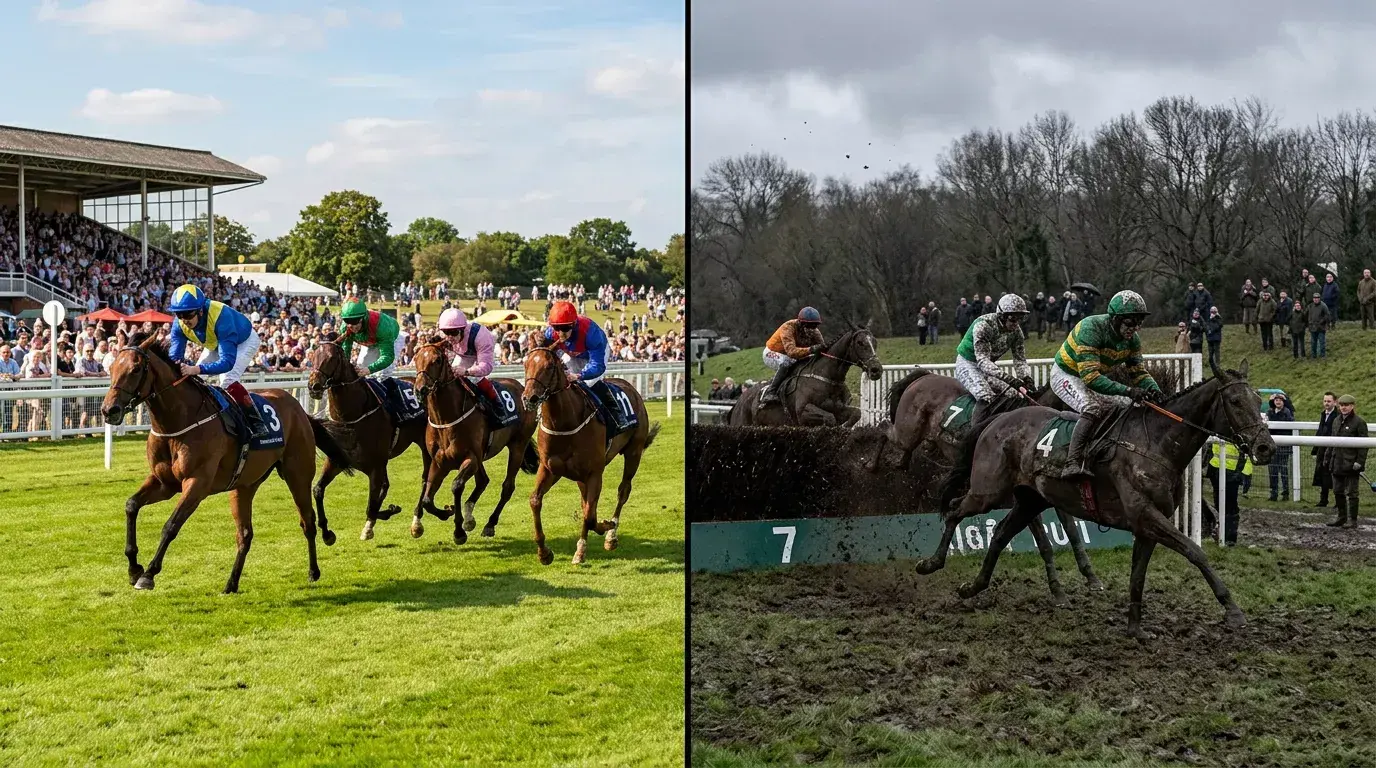
Participation Nearly Doubles in Spring and Summer — and Strategy Should Adjust
I noticed the pattern in my own betting records before I found it confirmed in the national data. From April through July my strike rate drops, my returns flatten and the markets feel tighter — harder to find value, harder to land a winner. It is not because I get worse at analysis in the spring. It is because the market gets better. Gambling Commission survey data shows that horse racing betting participation hits 7% of adults during the April-to-July window, compared to 4% in the January-to-April and July-to-October periods. When nearly twice as many people are active in the market, the collective wisdom of the crowd sharpens the odds and squeezes out inefficiencies.
That seasonal swing is not just a statistical curiosity. It shapes everything from the liquidity in betting markets to the availability of Best Odds Guaranteed promotions, from the size of Tote pools to the way bookmakers set their morning prices. If you bet the same way in July as you do in January, you are ignoring a structural factor that affects your edge.
The UK Racing Calendar: Key Periods and Overlapping Seasons
The UK racing calendar has no true off-season. Racing happens every day of the year, 365 days. But the character of the programme shifts dramatically across the calendar, and understanding those shifts is essential for seasonal strategy.
The core jumps season runs from October through April. This is National Hunt territory: hurdles, steeplechases, soft ground, Cheltenham Festival in March, the Grand National in April. The jumps market is driven by a more specialist audience — the participation rate sits at the lower 4% range — which means markets can be less efficient. Smaller fields, fewer casual bettors and a more predictable pool of runners create opportunities for punters who invest time in form analysis.
The flat turf season dominates from April through November. The transition happens quickly: the Guineas at Newmarket in early May, the Derby at Epsom in June, Royal Ascot in mid-June, then a packed summer programme through to the Champions Day card at Ascot in October. This is when participation surges to 7%, the field sizes expand (especially in summer handicaps) and the betting markets are at their most liquid and competitive.
All-weather racing fills the gaps. Kempton, Lingfield, Wolverhampton, Newcastle and Chelmsford stage flat racing on artificial surfaces year-round. All-weather meetings attract less betting interest than turf racing, which means smaller pools, lower liquidity and, occasionally, softer prices that reward the punters who pay attention to a product many ignore.
The overlap periods are strategically interesting. In March and April, both codes race simultaneously. You can back a novice hurdler at Cheltenham and a three-year-old handicapper at Doncaster on the same day. In September and October, the flat season’s tail end runs alongside the start of the new jumps campaign. These overlaps spread the market’s attention across more races, which can create pricing gaps — especially in the jumps market, where casual money has already migrated to the flat.
How Seasonality Affects Odds, Liquidity and BOG Availability
UK racecourse attendance topped 5.031 million in 2025, with the spring and summer months accounting for the bulk of that figure. The correlation between attendance, participation and market liquidity is direct: more people betting means more money in the market, tighter odds and fewer pricing errors.
During the peak flat season, BOG — Best Odds Guaranteed — is available on virtually every UK and Irish race from every major operator. The competition for customers is fiercest when the market is biggest, so operators extend their most generous features to attract and retain bettors. In the quieter winter months, some operators restrict BOG to selected meetings or exclude evening all-weather cards. If BOG is central to your approach, the summer gives you the widest coverage.
Liquidity affects how much you can bet. On a Saturday in June with a strong flat card, major operators will accept bets of 500 to 2,000 pounds on feature races without blinking. On a Tuesday in November with a modest jumps card, the same operators might cap you at a fraction of that. The market simply cannot absorb the same volume on a Plumpton novice hurdle as it can on a York Group 2.
My seasonal adjustment is simple. In the summer, I bet fewer races but at higher stakes — the markets are efficient enough that I need strong opinions to find value, and when I find it, I want to maximise exposure. In the winter, I bet more races at lower stakes — the less efficient markets produce more frequent opportunities, but the smaller field sizes and lower liquidity mean each individual bet carries more variance. The total amount wagered across the year stays roughly constant; the distribution across months changes.
Exchange betting is also affected by seasonality. Liquidity on the exchanges peaks during the summer flat season and drops noticeably during winter jumps meetings, especially midweek. A Saturday Cheltenham card maintains good exchange depth, but a Tuesday afternoon at Sedgefield may have minimal liquidity — meaning wider spreads, difficulty getting matched at your price and reduced scope for trading strategies. If exchange betting is central to your approach, the calendar dictates where and when you can operate effectively.
Tote pools follow the same seasonal pattern. Placepot pools at major summer meetings can exceed half a million pounds. In midwinter, the same Placepot might attract 20,000. Bigger pools mean bigger potential dividends on longshot outcomes, which makes the summer Placepot a better vehicle for the low-stake, high-upside approach that suits pool betting. The differences between flat and jumps extend well beyond the racing itself — the betting environment around each code has its own distinct character.
