

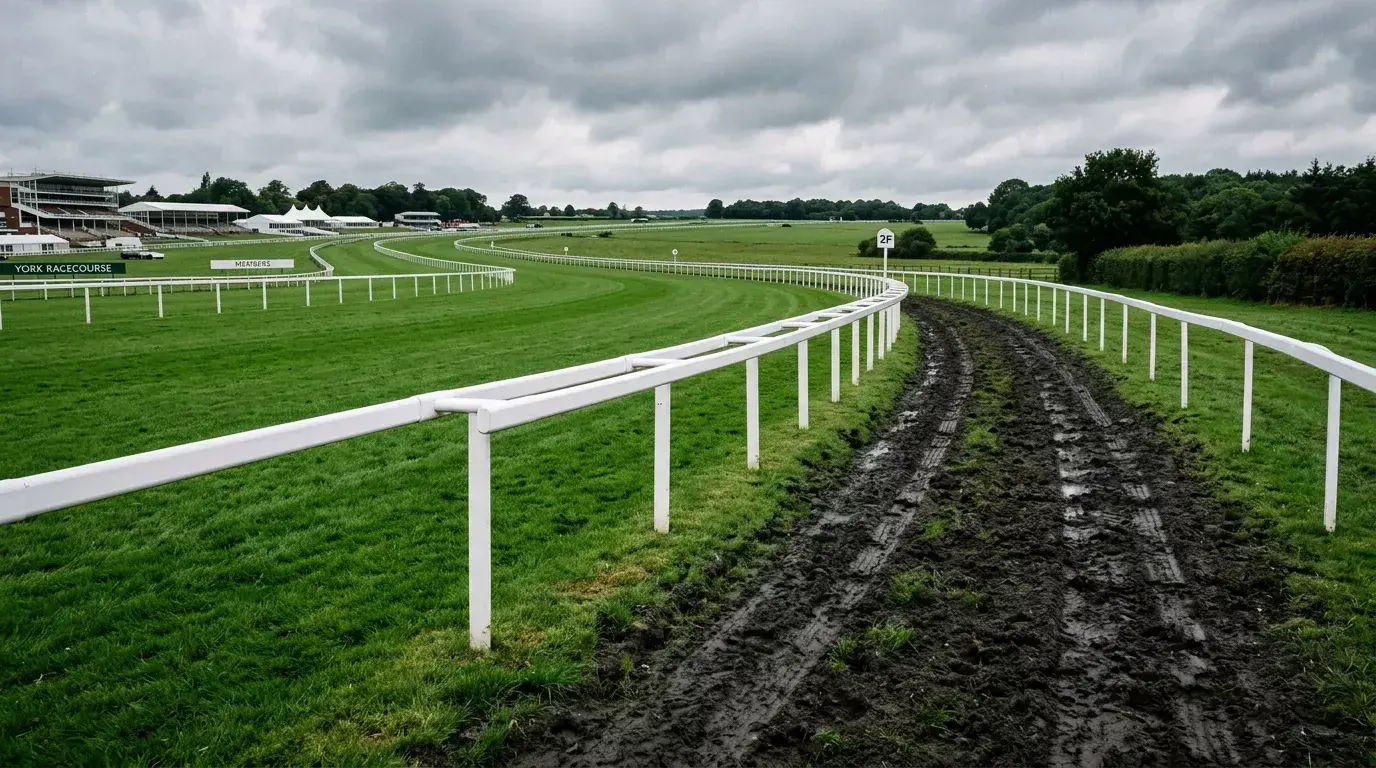
Going Specifications: Official Scale and GoingStick Readings
I backed a 3/1 shot at Haydock last winter without checking the going. It had brilliant form on good ground and the market loved it. The going was heavy. It finished tailed off in last place, beaten 40 lengths, looking like it had never galloped through mud in its life. Three pounds sixty down the drain because I skipped a ten-second check. That is the kind of mistake you only make once.
The going — the official description of ground conditions on a racecourse — is the single most important environmental variable in horse racing. It affects speed, stamina demands, injury risk and, critically for punters, which horses have a genuine chance and which are fighting the surface instead of their rivals. Betting participation peaks during the April-to-July season at 7% of surveyed adults versus 4% in other periods, which means a large proportion of bets are placed during the flat season when the going can swing from firm to soft after a single afternoon’s rain.
Understanding the going scale, knowing how to interpret it and adjusting your selections accordingly is foundational. Everything else in form analysis assumes the horse can handle the ground.
The Going Scale: Official Descriptions and GoingStick Readings
The official going scale runs from hard (the fastest, driest surface) to heavy (the slowest, most waterlogged). In practice, you will encounter these descriptions on UK turf courses, listed here from fastest to slowest: hard, firm, good to firm, good, good to soft, soft, heavy. All-weather surfaces use a different scale — standard, standard to slow, slow — because the artificial surface does not respond to rain the same way turf does.
Most courses also provide GoingStick readings, a numerical measurement taken by pushing a penetrometer into the turf at multiple points around the track. The scale runs roughly from 3.0 (heavy) to 14.0 (hard), with higher numbers indicating firmer ground. A reading of 8.0 to 10.0 typically corresponds to good ground. Below 6.0 and you are into soft territory. Above 12.0 and the ground is properly firm.
The official going description is issued by the clerk of the course on the morning of racing and can be updated throughout the day. It reflects an assessment of the entire track, but conditions are rarely uniform. You will often see descriptions like “good to soft, soft in places” which means most of the course is good to soft but certain areas — typically the inside rail and around bends where horses’ hooves churn up the turf — are softer. For betting purposes, I treat “soft in places” as closer to soft than to good to soft, because the sections that are softer tend to be the parts where races are decided — the bends and the final two furlongs.
The GoingStick readings are more useful than the verbal description because they give you a number to compare against a horse’s previous runs. If a horse has won on a GoingStick reading of 9.5 and today’s reading is 5.2, the ground is materially different even if both might fall under a broad “good” label. I cross-reference GoingStick readings with form data whenever the information is available, and it adds a layer of precision that the verbal descriptions alone cannot provide.
How Going Affects Speed, Stamina and Odds
The number of horses in training dropped to 21,728 in 2025, continuing a multi-year trend. That declining population means trainers are more selective about where they run their horses, and going preference is one of the main filters. A trainer with a horse that needs good to firm ground will withdraw from a meeting where the going has turned soft, rather than risk injury or a poor performance that damages the horse’s handicap mark. This self-selection means the horses that do run on testing ground are generally those that handle it — which tightens the form book and changes the betting dynamics.
On firm ground, speed dominates. Races are run faster, the emphasis falls on raw ability, and front-runners are harder to peg back because the surface offers minimal resistance. Flat sprints on firm ground are often decided by which horse breaks fastest and maintains pace. For bettors, firm ground tends to produce more predictable results — form horses deliver, favourites have a higher strike rate and big-priced upsets are less common.
Soft and heavy ground inverts that dynamic. Speed merchants struggle, stamina becomes the primary currency and the race often falls apart, with horses that cannot handle the surface dropping out of contention early. Horses bred for power rather than pace — typically those with stamina-oriented bloodlines — thrive in these conditions. In handicaps on soft ground, I have found that horses dropping in trip perform better than expected, because the slow surface adds an effective half-furlong or more of stamina demand to the advertised distance.
The odds market adjusts for going, but not always quickly or accurately enough. When the going changes on race morning — an overnight downpour, for instance — the market needs time to reprice. Horses that were fancied on the expected good ground may drift only slightly despite a material shift to soft, while horses that love cut in the ground shorten but not always by enough. That window, between the going announcement and the market’s full adjustment, is where alert punters find value.
Adjusting Bets for Changing Ground: Same-Day Going Movements
The going is not fixed. It changes during a race day, sometimes significantly. A hot afternoon dries the surface between races. A passing shower softens it. The clerk of the course will update the official going if the change is material, but smaller shifts happen without a formal announcement. I have seen the going change from good to soft to good within the space of four hours at a summer meeting where the sun came out after early-morning rain.
For punters, same-day going movement matters most on cards with seven or eight races. The first race might go off on decidedly soft ground, but by the sixth race the sun has dried the surface to good. If you backed a horse in the later race because it handles soft ground, you may find the ground has moved away from it by the time it runs.
I deal with this by checking the weather forecast for the racecourse location, not just the going report from the morning inspection. If rain is expected mid-afternoon, the later races will ride softer. If the forecast is dry and warm, the later races will ride quicker. This is basic information, freely available, and most punters ignore it — they look at the morning going and assume it will hold all day.
The other practical adjustment is watching how the earlier races play out. If front-runners are winning easily in the first three races, the ground is likely riding faster than the official going suggests. If hold-up horses are finishing strongest and race times are slow, the ground is riding deeper. That real-time feedback is more reliable than the morning assessment, and it directly informs how I bet on the later card. Reading form is the starting point, but adjusting for the ground your horse will actually run on — not the ground that was described at 8am — is what separates a good day from a frustrating one.
