

Fewer Horses, Smaller Fields: What the 2.3% Drop Means for UK Betting Markets
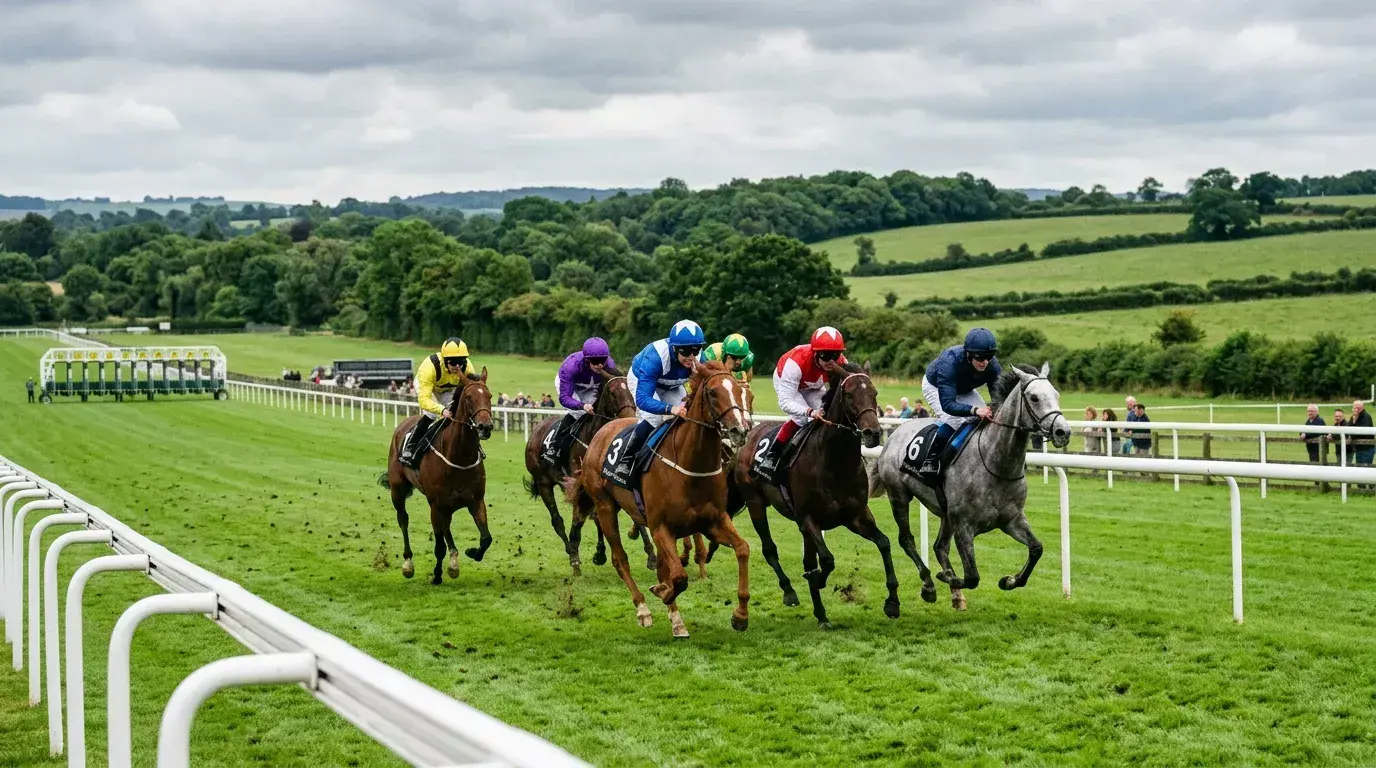
I noticed it first at a midweek meeting last autumn. A handicap hurdle that would have attracted 14 or 15 runners a few years ago went off with nine. The racecard looked thin. The betting market felt compressed — shorter prices across the board, less room for each-way value, less volatility for in-play traders. That single race was a microcosm of a trend that is reshaping UK racing: fewer horses are in training, and the effects ripple directly into the betting markets that fund the sport.
The BHA’s data is unambiguous. The number of horses in training in the UK fell to 21,728 in 2025, a 2.3% decline from 2024 and a continuation of a multi-year downward trajectory. This is not a one-year blip caused by weather or economic disruption. It is a structural contraction in the population of racehorses, and it matters to every punter who bets on British racing.
Horses in Training: 21,728 in 2025 and the Multi-Year Trend
The decline is not dramatic in any single year, which is why it receives less attention than it deserves. A 2.3% drop sounds modest. But compound modest annual declines over a decade and the cumulative effect is substantial. UK racecourse attendance surpassed 5.031 million in 2025 — the sport is healthy at the turnstile — yet the animal population that provides the raw material for every race is contracting.
The causes are interlinked. Training a racehorse in the UK costs between 20,000 and 40,000 pounds per year depending on the trainer, the location and the horse’s needs. Prize money — while recently increased, with the HBLB raising its allocation to 77.1 million for 2026 — does not cover training costs for the majority of owners, particularly at the lower levels of the sport. Owning a racehorse is a loss-making proposition for most people, subsidised by the social experience and the occasional thrill of a winner. When costs rise and returns do not keep pace, some owners exit, and their horses leave training.
The breeding pipeline is also a factor. The foal crop — the number of thoroughbred foals born each year — has been declining across Europe. Fewer foals today means fewer horses in training three and four years later. This is a lagging indicator: the foal crop reductions that show up in today’s training population reflect decisions made by breeders years ago, influenced by stud fees, mare availability and the economic outlook for the racing industry at the time of mating.
There is a geographic dimension too. The cost of running a training yard in traditional centres like Newmarket or Lambourn has risen with property values and staff costs. Some smaller trainers have left the profession entirely, and their horses have either transferred to larger yards or left training altogether. The consolidation of the training industry into fewer, larger yards does not necessarily reduce the total horse population, but it does reduce the diversity of the training programme and the number of runners at smaller meetings.
Smaller Fields Mean Shorter Odds and Less Each-Way Value
This is where the horse population directly impacts your betting. Fewer horses in training means fewer entries for races, which means smaller field sizes. A race with eight runners has fundamentally different betting dynamics from a race with 16 runners. The favourite’s win probability is higher in smaller fields. The each-way terms are less generous (two places at 1/4 odds instead of four places at 1/4 in a 16-plus handicap). The potential for big-priced each-way place returns — the foundation of many punters’ strategies — shrinks with every runner that drops out.
Betting turnover per race fell 5.6% year-on-year in 2025 and 11.6% versus 2023. Part of that decline is driven by affordability checks and competition from other sports, but part of it reflects the simple reality that smaller races attract less money. A seven-runner conditions stakes at Wolverhampton on a Tuesday afternoon does not inspire the same betting interest as a 20-runner Saturday handicap. When the proportion of low-runner races increases because the horse population is smaller, the aggregate turnover declines even if the big events maintain their volume.
For exchange bettors, the impact is particularly acute. Exchange markets depend on liquidity — enough backers and layers to match bets at competitive prices. In small fields with lower betting interest, exchange liquidity dries up, spreads widen and the theoretical advantages of exchange betting (tighter overround, the ability to lay) erode. I have found that my exchange activity has gradually concentrated on bigger races because the smaller ones no longer offer enough liquidity to make trading viable.
The each-way angle deserves specific attention. My records show that the average number of runners in UK handicap races has dropped by roughly one runner per race over the past five years. That does not sound significant until you consider the knock-on effect: one fewer runner in a 12-horse race changes the standard place terms from three places (8-15 runners) to two places (5-7 runners) if the field drops to seven. That single runner can halve the number of places paid on your each-way bet. The trend towards smaller fields is not just reducing the number of betting opportunities — it is reducing the quality of each opportunity by compressing the each-way terms.
None of this means horse racing is dying. Attendance is up, the levy is at record levels and major festivals continue to attract world-class fields. But the everyday product — the midweek handicaps, the novice races, the bread-and-butter of the racing calendar — is getting thinner. For bettors who depend on field size, competitive markets and liquid exchanges, the horse population decline is not a background trend. It is a factor that should shape where, when and how you allocate your betting activity.
