

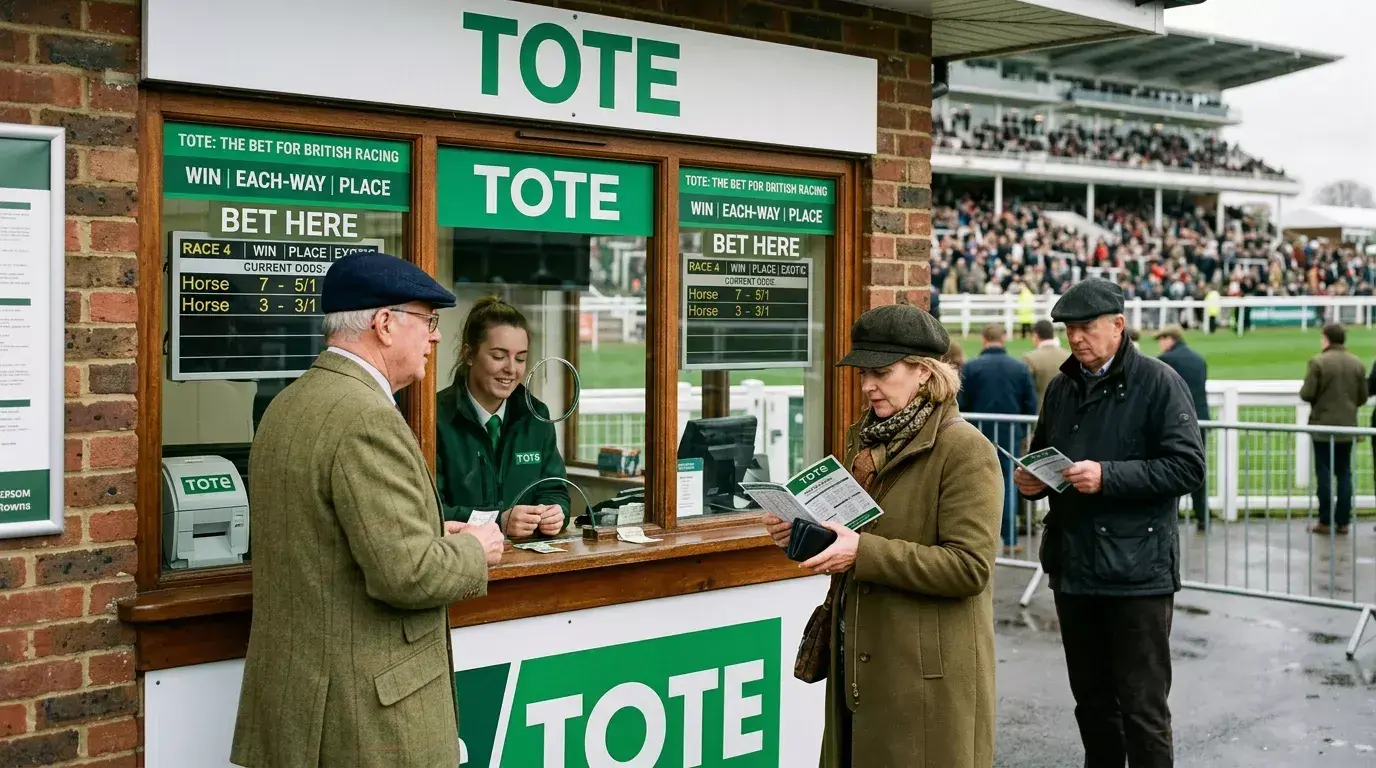
Pool Betting: Punters Set the Price, Not the Bookmaker
The first time I placed a Tote bet, I backed a horse at what I thought was 6/1. It won, and the dividend came back at 3.80. I had assumed the Tote worked like a bookmaker — fixed price, take it or leave it. It does not. In pool betting, the dividend is determined by how much money is in the pool and how it is distributed across the runners. The price you see before the off is an estimate based on the current pool. The actual return is only finalised after the race, once all bets are counted and the deductions are made.
The Horserace Betting Levy reached a record 108.9 million pounds in FY2024-25, funded by a percentage of bookmaker GGY on British racing. The Tote operates differently: it pools all bets together, takes a deduction (typically around 13-28% depending on the bet type) and divides the remainder among the winning tickets. The pool model means there is no overround in the traditional sense — the Tote’s margin is the fixed deduction, not a built-in inflation of the odds.
For punters, this creates opportunities that fixed-odds markets do not. When the crowd heavily backs a favourite, the pool dividend on longer-priced horses can exceed the bookmaker price. Conversely, when a popular horse wins, the Tote dividend is often lower than the starting price because so much of the pool sat on that selection. Knowing when the Tote offers better value than the bookmaker — and vice versa — is a skill that develops with experience.
How Tote Pools Work: Win, Place, Exacta, Trifecta
The core Tote pools mirror the standard bet types but with pool mechanics. The Win pool pays a dividend to anyone holding a ticket on the winning horse. The Place pool pays dividends on horses that finish in the places (the number of places follows the same field-size rules as each-way betting). Both are straightforward: one selection, one pool, one dividend.
The Exacta requires you to predict the first two finishers in the correct order. The pool is shared among all tickets with the right combination. Because the permutations multiply, Exacta dividends can be significantly larger than Win dividends — a 50/1 Exacta is not unusual in a competitive handicap. I treat Exactas as low-stake, high-upside bets and limit my exposure to a few pounds per race. The Exacta is also useful as a form of insurance: if you have a strong view on which horse will win but are uncertain about which will finish second, a reverse Exacta (two combinations covering both orders) doubles the cost but captures value from the precise finishing order that a standard win bet cannot.
The Trifecta extends the concept to the first three in order. The pool is smaller (fewer people bet on Trifectas) but the dividends can be spectacular — four-figure returns on a one-pound stake are possible when an outsider fills one of the three positions. The flip side is that the hit rate on Trifectas is extremely low, and the Tote’s deduction on exotic pools is higher than on the Win pool.
The Swinger is a pool bet unique to the Tote in some markets: pick two horses to finish in the first three in any order. It is more forgiving than the Exacta because order does not matter and three places qualify instead of two. Swinger dividends are lower than Exactas but the strike rate is meaningfully higher, which makes it a useful middle ground for punters who want exotic returns without exotic risk.
The Placepot: Six Races, One Low Stake, Variable Returns
The Placepot is the Tote’s flagship product and, in my view, the single best low-stake bet in UK racing. The concept: pick a horse to place in each of the first six races on a card. If all six place, you share the pool. UK racecourse attendance surpassed 5.031 million in 2025, and on-course Placepot pools at major meetings regularly exceed 500,000 pounds.
The appeal is the entry price. Minimum stake is typically one pound per line, though you can “perm” multiple selections in each race. A Placepot with two selections in each of the six races generates 64 lines (2 to the power of 6) at a cost of 64 pounds. That is a material outlay, but many punters use a single selection in the easier races and two or three in the trickier ones, keeping the cost manageable.
Placepot returns are inherently unpredictable. On a day where favourites dominate, the pool is shared among many winning tickets and the dividend might be 20 or 30 pounds for a one-pound stake. On a day where outsiders place across the card, fewer tickets survive and the dividend can reach four figures. I have seen Placepot dividends exceed 5,000 pounds on a one-pound unit at meetings where the results went against the crowd.
My Placepot strategy is simple. I focus on identifying at least one “banker” — a horse I am very confident will place — and use it as a single selection to keep costs down. In the other races, I use two or three selections, prioritising horses with strong place form over outright win candidates. The Placepot rewards consistency, not brilliance. A horse that finishes third every time is more valuable to a Placepot strategy than a horse that wins one in three and finishes unplaced in the others.
The main pitfall is overcomplicating the permutations. Three selections in every race across six races generates 729 lines — that is 729 pounds at a pound a line. The cost escalates fast, and the expected dividend does not scale proportionally. Discipline with the number of selections is what separates profitable Placepot punters from those who spend more than they recover. If you are looking for a way to stay engaged across an entire afternoon’s card without staking heavily on individual races, the Placepot is hard to beat — provided you keep the permutations under control and treat it as a complement to, not a replacement for, your main fixed-odds betting.
