

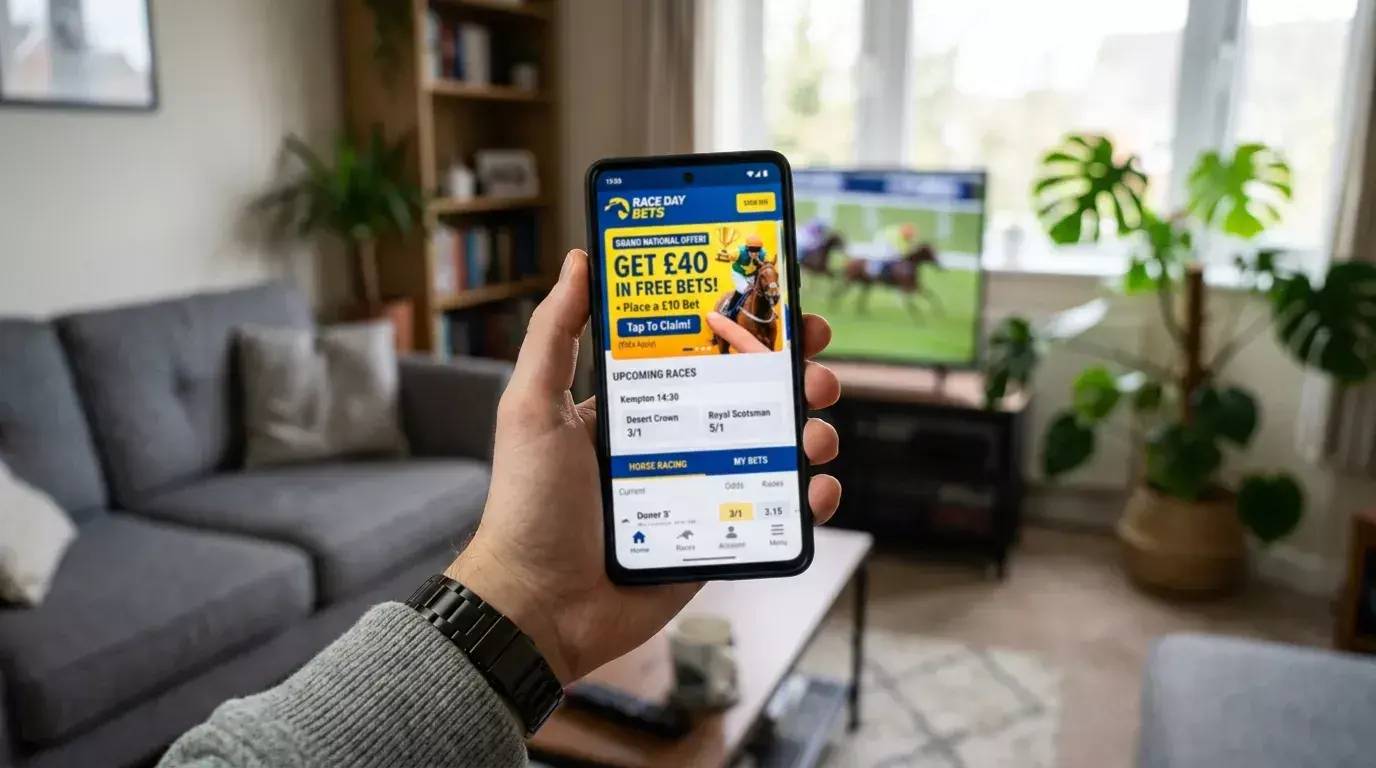
Welcome Offers: Stake Terms and Wagering Requirements
I once sat in a pub and watched a friend sign up with three different bookmakers in the space of 20 minutes, grabbing every welcome offer he could find. “Free money,” he said. Six weeks later, he had lost 150 pounds of his own cash trying to meet the qualifying requirements. The free bets were not free. They never are — at least not in the way the advertising suggests.
Free bets and welcome offers are customer acquisition tools. The average monthly active online betting accounts reached 13.5 million in early 2025, and operators spend heavily to attract and retain each one of those accounts. A welcome offer is the cost of acquisition — the operator calculates that the average new customer will deposit and bet enough over their lifetime to more than cover the cost of the initial promotion. That is not cynicism; it is how the business works. Understanding this gives you a clearer view of what a free bet is actually worth and how to use it without the offer using you.
Stake Not Returned, Stake Returned and Risk-Free: Free Bet Structures
Not all free bets are created equal, and the difference between the structures determines their real value. The three main types are stake not returned (SNR), stake returned and risk-free bets.
Stake not returned is the most common free bet structure. You receive a free bet token — say, ten pounds — and if your selection wins, you collect the profit but not the stake. A ten-pound free bet on a horse at 5/1 returns 50 pounds profit (not 60). The ten-pound “stake” was never real money — it was a token that disappears after use, win or lose. This means the expected value of an SNR free bet is lower than the face value. On a selection at 5/1, a ten-pound SNR free bet has an expected value of roughly 8.30 pounds (assuming the odds reflect a fair probability). Still worth taking, but not worth 10 pounds.
Stake returned free bets give you the full return including the stake amount if you win. A ten-pound stake-returned free bet at 5/1 returns 60 pounds — exactly the same as if you had bet ten pounds of your own money. These are more valuable but rarer. When you find one, the optimal strategy is to place it on a longer-priced selection to maximise the expected value, since the stake-returned structure eliminates the penalty that SNR imposes on longshots.
Risk-free bets work differently: you place a bet with your own money, and if it loses, the operator refunds your stake as a free bet (usually SNR). The net effect is that your first bet is partially protected — if it wins, you keep the full return; if it loses, you get a second chance. The real value of a risk-free bet depends on the odds of your initial selection and the terms of the refund.
Wagering Requirements, Minimum Odds and Qualifying Bets
The terms and conditions of welcome offers are where the real story lives. Around 10.3% of UK adults bet online on sport and racing, and every one of them who signs up for a new account encounters a wall of small print. The key terms to watch are wagering requirements, minimum odds for qualifying bets and the definition of “qualifying bet” itself.
Wagering requirements specify how many times you must turn over the bonus or deposit amount before you can withdraw any winnings. A “3x wagering requirement” on a 20-pound deposit means you must place 60 pounds in bets before the bonus funds or related winnings become withdrawable. Some operators apply wagering requirements to the deposit alone; others apply them to the deposit plus bonus combined. The difference matters: 3x on a 20-pound deposit is 60 pounds of betting; 3x on deposit plus a 20-pound bonus is 120 pounds.
Minimum odds conditions require your qualifying bet to be placed at odds above a specified threshold, typically 1/2 (1.50 decimal) or evens (2.0 decimal). This prevents punters from using the qualifying bet on a near-certainty and converting the free bet with minimal risk. If you place a qualifying bet below the minimum odds, the free bet will not be triggered, and you will have spent your own money for nothing.
Qualifying bet definitions vary too. Some operators require the qualifying bet to be placed on horse racing specifically. Others accept any sport. Some require a single bet; others accept multiples. A few require the qualifying bet to be settled (not voided or cashed out) before the free bet is credited. Read every line. The operators know that most customers do not.
There is a further trap that catches out inexperienced punters: the time limit on using qualifying bets and free bets. Most welcome offers require you to place the qualifying bet within seven days of registration and use the free bet within another seven to thirty days. Miss either deadline and the offer expires. I have met punters who signed up for an offer, forgot about it for a fortnight and discovered the promotion had lapsed. The operators are not in the business of sending reminders.
One more detail: some operators exclude certain bet types from qualifying. Cashed-out bets, voided bets and bets placed using other promotional offers typically do not count as qualifying bets. If your qualifying bet is on a horse that becomes a non-runner and the bet is voided, you may need to place another qualifying bet to trigger the free bet. The terms will specify this, but it is rarely highlighted in the marketing.
My approach to welcome offers is pragmatic. I take them when the terms are straightforward and the qualifying bet aligns with a selection I would have backed anyway. I do not contort my betting to meet qualifying conditions. If a welcome offer requires me to bet on something I have no opinion on, the “free” bet is not free — it is a gamble I would not otherwise have taken, funded by my own money. The best use of a free bet is as a bonus on top of your normal betting activity, not as a reason to start opening accounts you do not need.
