

Stake Limits Are Set by Operators, Not the Law — But Regulation Changes the Picture
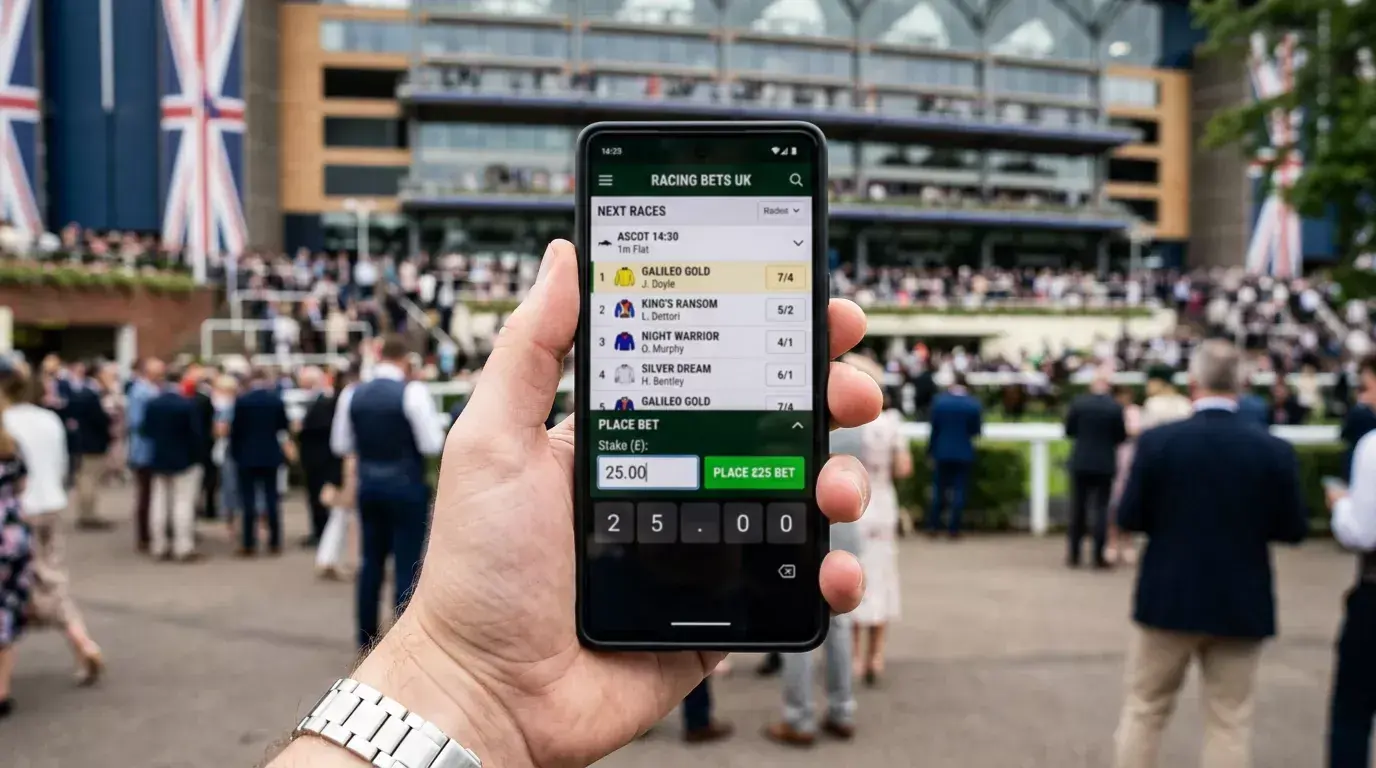
A punter I work with wanted to place a 500-pound win bet on a horse at 7/2 in a Class 2 handicap at York. His operator accepted 120 pounds and rejected the rest. No explanation, no appeal, no way to get the full amount on. He tried a second operator — same horse, same odds — and got 500 pounds on instantly. The difference was not regulatory. It was commercial. Each bookmaker sets its own maximum stake policy, and those policies vary wildly depending on the operator, the race, the time of day and, increasingly, your individual account profile.
Since February 2025, the affordability check threshold has sat at 150 pounds in net deposits per month. That regulatory layer has added a new dimension to the question of how much you can bet. The legal answer is: there is no statutory maximum stake on horse racing in the UK. The practical answer is: your operator and the Gambling Commission’s affordability framework will determine the ceiling before any law does.
Maximum Bet Limits: How Bookmakers Set and Enforce Them
Bookmakers set maximum stakes on a race-by-race and customer-by-customer basis. The factors that determine your personal limit include your account history, your profitability (winners get restricted faster than losers), the liquidity of the market you are betting into and the operator’s risk appetite.
For mainstream UK and Irish racing, most major operators will accept bets of 500 to 2,000 pounds on feature races — Group or Graded events, big handicaps, festival meetings. For smaller races — a Monday afternoon novice hurdle at Plumpton, for example — the limits drop, sometimes to 50 or 100 pounds. The market simply cannot absorb large bets on races with limited liquidity without moving the price against the operator.
The Racing Post’s Big Punting Survey, which sampled around 10,000 bettors, found that 23.7% had experienced affordability checks in 2025 — up from 16.6% in 2023. For higher-staking punters, the experience is more common and more disruptive. A third of those in the higher-staking bracket admitted to using unlicensed operators to avoid restrictions. The connection between tight limits and black market migration is well documented, but operators are caught between commercial incentives to accept bigger bets and regulatory obligations to monitor customer affordability.
Account restrictions are the other mechanism. Even without formal maximum bet rules, operators can and do restrict individual accounts. A punter who consistently beats the starting price, backs winners at above-market rates or uses methods the operator considers undesirable (such as systematic arbitrage) will find their maximum stakes reduced to trivial amounts — sometimes as low as a few pounds. This practice, known as “gubbing,” is not regulated by the UKGC; operators have broad discretion to manage their risk.
The practical consequence is a two-tier market. Recreational bettors who lose money over time are welcomed with open accounts and full features. Profitable bettors are systematically restricted. I have spoken to sharp punters who hold accounts with 15 or more operators simply to spread their activity and delay the inevitable restrictions. It is an arms race between the bettor’s edge and the operator’s risk management, and the operator always has the final say.
Affordability Thresholds and Their Effect on High-Staking Punters
The affordability check framework has fundamentally altered the landscape for anyone who bets more than modest amounts. The 150-pound monthly net deposit threshold triggers a “light-touch” check using credit reference agency data. If the check raises concerns, the operator may request additional documentation: payslips, bank statements, tax returns. Sixty-five percent of UK bettors told a YouGov survey they are unwilling to provide such documents to continue gambling.
For punters who bet within that 150-pound monthly window, the checks are largely invisible. The UKGC reports that 95% of the 530,000 checks conducted passed without friction — a figure that the Commission highlights as evidence the system works. But that statistic reflects all bettors, including the majority who bet small amounts. For the subset who bet regularly at higher stakes — the core horse racing audience that drives turnover — the experience is markedly different.
I know serious racing punters who have moved their entire betting activity to exchanges to avoid the affordability issue, because exchange platforms apply the checks differently depending on how the account is structured. Others have reduced their activity. A few — and this concerns me — have moved to unlicensed operators where no checks exist. The Jockey Club has estimated that affordability checks could cost British racing 250 million pounds over five years through reduced turnover.
There is a psychological dimension too. Even punters who pass the affordability check without friction report feeling surveilled and uncomfortable. The knowledge that your deposits are being monitored and cross-referenced against credit agency data changes the experience of betting. For some, it is a minor irritation. For others — particularly those with higher disposable income who bet well within their means — it feels disproportionate. The 65% of bettors who told YouGov they would not provide personal financial documents are not all problem gamblers. Many are simply uncomfortable with the level of intrusion the system demands.
The practical reality for a high-staking punter in 2026 is this: your ceiling is determined by a combination of the operator’s commercial limits, your affordability profile and the regulatory framework. If you bet within the 150-pound monthly threshold, you are unlikely to encounter friction. Above that, your experience depends on your financial profile, how much documentation you are willing to provide and which operator you use. The full mechanics of affordability checks deserve their own dedicated reading if this applies to you.
